The Two Golden Windows: How Natural Light at Dawn and Dusk Can Redefine Your Photography
There is a reason seasoned photographers set multiple alarms and haul their gear to rooftops, riverbanks, and canyon rims long before most people have finished their morning coffee. The light that exists in the brief intervals surrounding sunrise and sunset does not simply illuminate a scene — it transforms it. At Clor Images, we believe that understanding light is the single most powerful skill a visual artist can cultivate. And among all the varieties of natural light available to photographers, two stand apart: the warm, saturated glow of golden hour and the cool, ethereal luminescence of blue hour.
These two windows of time are neighbors on the clock but worlds apart in character. Knowing when each occurs, what each demands technically, and what kind of story each is best suited to tell can fundamentally change the quality and emotional resonance of your images.
What Is Golden Hour — And Why Does It Feel So Cinematic?
Golden hour refers to the period shortly after sunrise and shortly before sunset, typically spanning 30 to 60 minutes depending on your geographic latitude and the time of year. During this window, sunlight travels through a much thicker cross-section of the atmosphere, scattering the shorter blue and violet wavelengths and allowing the longer red, orange, and amber tones to dominate.
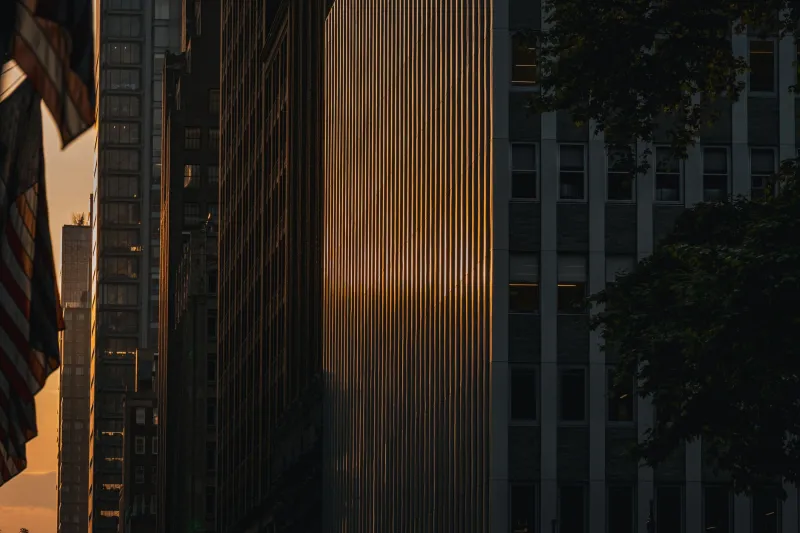
The result is a quality of light that is simultaneously warm, directional, and diffused. Shadows grow long and soft. Textures become pronounced. Skin tones appear flattering and luminous without any artificial intervention. For portrait photographers, landscape artists, and architectural shooters alike, this is often considered the most forgiving and flattering light the natural world provides.
Consider Monument Valley on the Arizona-Utah border at golden hour. The sandstone buttes, already dramatic in form, absorb the amber light and appear to glow from within. Or picture the Chicago skyline reflected in the Chicago River at sunset — the steel and glass facades capturing every shifting shade of orange and rose. These are not lucky accidents. They are the result of intentional planning around a predictable, repeatable phenomenon.
Technical settings for golden hour:
- Set your white balance to around 4,500–5,500K to preserve the warmth without overcooking it, or shoot in RAW and adjust in post.
- Use a wide aperture (f/1.8–f/4) for portraits to separate your subject from the glowing background.
- For landscapes, stop down to f/8–f/11 to maintain sharpness across the frame while still capturing the rich ambient light.
- A lens hood is essential — low-angle sun creates significant flare potential.
Blue Hour: The Quieter, More Mysterious Sibling
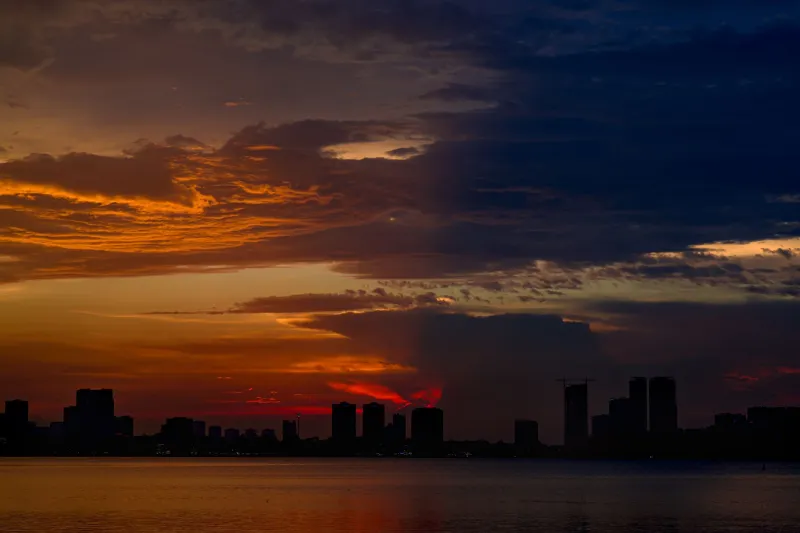
Blue hour occurs just before sunrise and just after sunset, occupying the transitional phase between full darkness and the arrival of golden light. The sun sits below the horizon, and the sky is illuminated by indirect, scattered light that skews heavily toward blue and indigo tones. Unlike golden hour's theatrical warmth, blue hour offers something more introspective — a hushed, cinematic coolness that renders cityscapes and architectural subjects with extraordinary depth.
This is the window that makes city photographers particularly passionate. During blue hour, artificial light sources — streetlamps, neon signs, illuminated office towers, traffic trails — achieve a near-perfect balance with the ambient sky light. Neither overwhelms the other. The sky retains detail and color rather than going pure black, and the artificial lights glow without blowing out.
New York City's Manhattan Bridge photographed from DUMBO in Brooklyn during blue hour is a masterclass in this balance. The bridge's steel cables and the skyline behind it sit against a deep cerulean sky, while the bridge's own lighting and the glow from surrounding buildings add layers of warmth that contrast beautifully with the cool ambient tones. Similarly, the neon-lit French Quarter in New Orleans photographed during blue hour takes on an almost painterly quality that midday or full-night shooting simply cannot replicate.
Technical settings for blue hour:
- A sturdy tripod is non-negotiable. Exposure times will range from several seconds to several minutes.
- Set your ISO low (100–400) to minimize noise during long exposures.
- Use a remote shutter release or your camera's self-timer to eliminate vibration.
- Experiment with white balance — a daylight setting (5,500K) will render the sky a richer blue, while a tungsten setting (3,200K) will push it toward a deeper, more dramatic indigo.
- Shoot in RAW format to retain maximum latitude for color grading.
Planning Your Shoot: Apps, Angles, and Preparation
Both golden hour and blue hour are fleeting, and neither waits for an unprepared photographer. Fortunately, a suite of excellent tools exists to help you plan with precision.
Applications such as PhotoPills, The Photographer's Ephemeris, and Sun Surveyor allow you to overlay the sun's trajectory onto satellite maps of your chosen location. You can determine exactly where the sun will rise or set relative to your subject, scout compositions in advance, and identify the precise minutes when the quality of light will peak.
Arrive early — ideally 20 to 30 minutes before your target window begins. Conditions shift rapidly, and the best frame often appears before you expect it. Carry your gear ready to deploy, not still packed in your bag.
For golden hour, prioritize subjects that benefit from warm directional light: textured rock formations, tree-lined roads, open fields, and human subjects. For blue hour, orient yourself toward cityscapes, architecture, water reflections, and scenes where artificial lighting plays a meaningful compositional role.
Choosing Between the Two: A Question of Story
If golden hour is the extrovert — bold, warm, immediately arresting — then blue hour is the introvert: measured, layered, and quietly profound. Neither is objectively superior. The choice depends entirely on the story you intend to tell.
A travel photographer documenting the American Southwest's red rock country will almost always favor golden hour, when the landscape's natural drama is amplified by sympathetic light. An architectural photographer capturing a newly completed tower in downtown Seattle may find that blue hour reveals the building's relationship to the city in ways that no other lighting condition can.
At Clor Images, we encourage photographers to experience both within the same shoot whenever possible. Arrive before sunrise, shoot through golden hour, pause as the light transitions, then continue through blue hour. What you will find is not two separate sessions, but a continuous, evolving conversation between light and subject — one that rarely fails to produce something extraordinary.
The camera is merely a tool. Light is the true medium. And these two fleeting windows are among the finest opportunities nature affords us to work with it at its most generous.