The Ground Beneath the Frame: How America's Finest Photographers Transform the Overlooked Into the Unforgettable
The Ground Beneath the Frame: How America's Finest Photographers Transform the Overlooked Into the Unforgettable
There is a habit so common among developing photographers that instructors have grown weary of correcting it. The camera rises, the eye locks onto the subject — a mountain peak, a city skyline, a human face — and the shutter falls. The resulting image is technically sound, perhaps even handsome. But it is flat. It does not breathe. It does not invite the viewer to step inside. What is missing, more often than not, has nothing to do with the subject at all. It has everything to do with what the photographer failed to see at their feet.
The foreground — that expanse of visual real estate between the camera and the primary subject — is photography's most consistently squandered resource. And yet, among the practitioners who have mastered it, the foreground is spoken of with something approaching reverence.
The Illusion of Depth on a Flat Surface
Photography presents a fundamental paradox: it is a two-dimensional medium tasked with conveying three-dimensional reality. Every tool a photographer employs — lens choice, aperture, perspective — is, in some sense, an instrument for creating the perception of depth where none physically exists. The foreground is perhaps the most powerful of these instruments, and also the least understood.
When a strong foreground element anchors an image, the human eye performs a remarkable cognitive act. It reads the scene as a journey — from the near to the far, from the specific to the expansive. The viewer is not merely observing a photograph; they are being drawn through it. This distinction separates images that are looked at from images that are looked into.
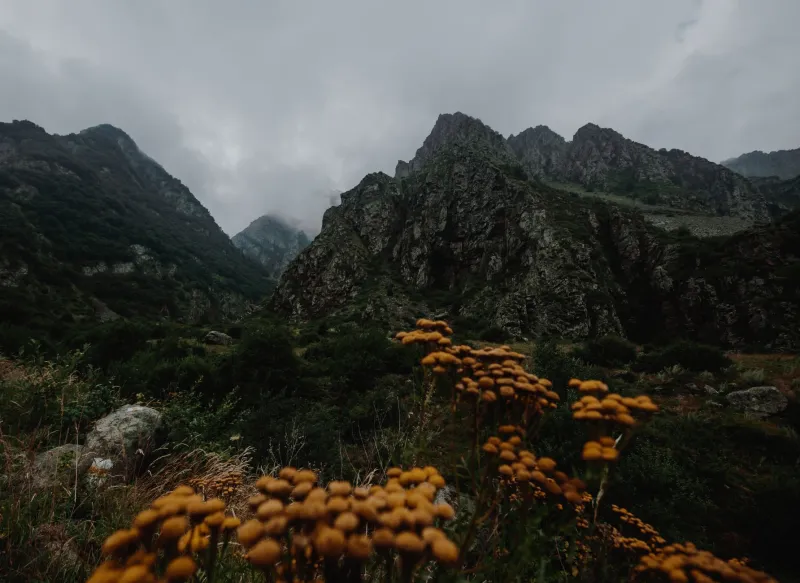
Landscape photographers working in the American West have long understood this principle with particular clarity. The vast, open terrain of places like Utah's canyon country or the volcanic fields of the Pacific Northwest offers endless opportunities to exploit the foreground-to-background relationship. A cluster of wildflowers at the base of a mesa, a web of cracked earth leading toward a distant butte, a frost-edged puddle reflecting the first light of dawn — each of these elements serves as a visual anchor, a point of entry through which the eye begins its journey across the frame.
Engineering Entry Points
The most deliberate foreground work is rarely accidental. Photographers who consistently produce layered, spatially rich images tend to approach their compositions in reverse — they find their foreground first, then build the rest of the frame around it.
This methodology demands patience and physical commitment. It often means getting low, sometimes dramatically so. A wide-angle lens positioned inches from a patch of textured ground can transform an otherwise ordinary vista into something that feels almost immersive. The foreground element swells in apparent size relative to the background, amplifying the sense of distance between the two and creating a visual tension that pulls the viewer deeper into the scene.
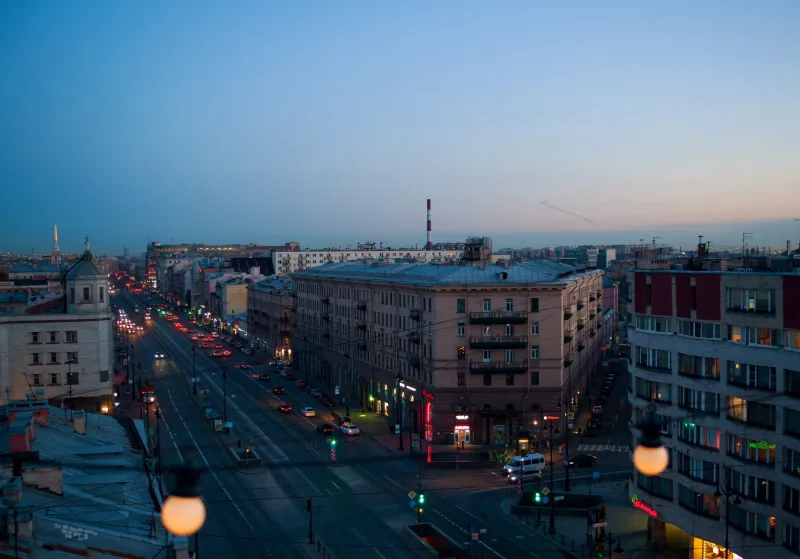
Urban photographers face a different set of challenges and opportunities. The city offers foreground material in extraordinary abundance — cobblestones, rain-slicked pavement, iron grates, fallen leaves pressed against a curb. The difficulty lies not in finding these elements but in recognizing their potential and deploying them with intention rather than accident. A street photographer who pauses to notice the shadow geometry on a sidewalk before raising the camera is working in an entirely different register than one who simply reacts to whatever enters the frame.
Context as a Visual Argument
Beyond the mechanics of depth and dimension, the foreground performs a subtler function: it provides context. A portrait of a rancher in Wyoming means something different when the foreground includes a weathered fence post and a coil of rusted wire than it does when the subject floats against a clean, neutral backdrop. The environmental foreground does not merely decorate — it argues. It makes a claim about who this person is, where they exist, and what their life contains.
This contextual dimension of foreground composition is particularly resonant in documentary and editorial photography. When working on long-form projects documenting American communities — agricultural towns, post-industrial cities, Indigenous reservations — photographers who attend carefully to their foregrounds produce images with a density of information that purely subject-focused frames simply cannot achieve. The foreground becomes a kind of visual footnote, enriching the primary statement with layers of supporting evidence.
The Foreground as Visual Tension
Some of the most compelling uses of foreground are deliberately disruptive. Rather than guiding the eye smoothly toward a subject, certain photographers introduce foreground elements that create friction — an out-of-focus object looming at the edge of the frame, an unexpected color note that demands acknowledgment before the eye moves on, a shape that partially obscures the subject and forces the viewer to work slightly harder to complete the image.
This approach carries risk. Handled clumsily, an intrusive foreground reads as a compositional error — a distraction rather than an intention. But executed with control, it produces photographs that linger in the memory precisely because they resist easy resolution. The viewer senses that something is being withheld or complicated, and that sensation generates engagement.
The balance between invitation and obstruction is one of the more sophisticated judgments a photographer makes, and it cannot be reduced to a rule. It emerges from an accumulated understanding of how images communicate — a fluency that develops only through sustained practice and honest self-critique.
Retraining the Eye
For photographers looking to develop a stronger foreground instinct, the prescription is straightforward, if not always easy. Before raising the camera, look down. Examine the ground, the near surfaces, the immediate environment. Ask what is already present that could serve the image, and ask how the camera's position might be adjusted to incorporate it more effectively.
Experiment with extreme low angles. A perspective that feels awkward or undignified in the moment often produces the most spatially compelling results. Wide-angle focal lengths — particularly in the 16mm to 24mm range on full-frame systems — amplify the foreground-to-background relationship dramatically and reward photographers willing to get physically close to the ground.
Perhaps most importantly, resist the impulse to crop the foreground in post-processing. There is a persistent tendency among photographers to tighten compositions during editing, eliminating foreground elements that seemed significant in the field but feel uncertain on screen. This impulse is worth questioning. More often than not, the discomfort with a strong foreground reflects unfamiliarity rather than genuine compositional failure.
The Space That Makes the Image
At Clor Images, the principle that light meets vision is understood to mean something more than the physics of exposure. It speaks to the moment when a photographer's trained perception transforms raw visual information into a coherent, resonant statement. The foreground is central to that transformation.
The photographers who have internalized this understand something that cannot be easily articulated in technical terms: that the space between the camera and the subject is not a void to be minimized but a canvas to be composed. It is where the viewer first enters the image. It is where depth is established, context is set, and the visual argument begins.
Mastering the foreground does not require exceptional equipment or extraordinary access. It requires only a willingness to look at what is already there — and the discipline to let what is underfoot shape what is on the horizon.