Silver and Shadow: The American Photographers Reviving a 19th-Century Process That Algorithms Cannot Touch
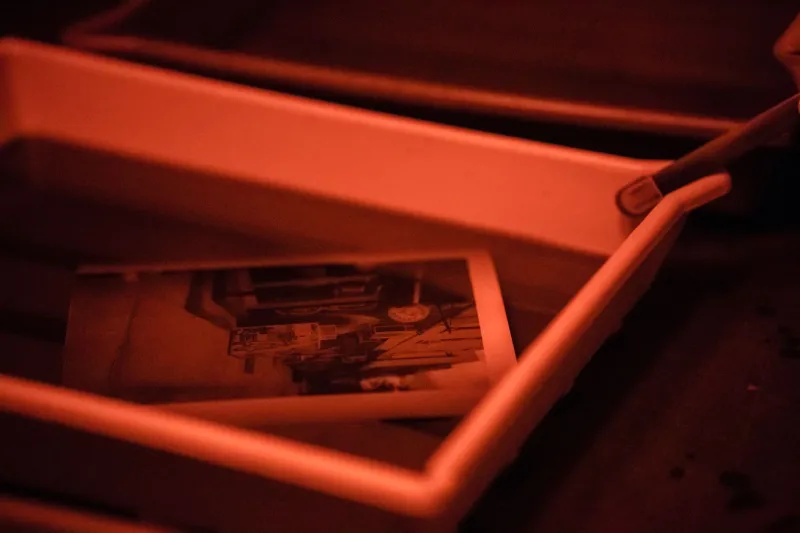
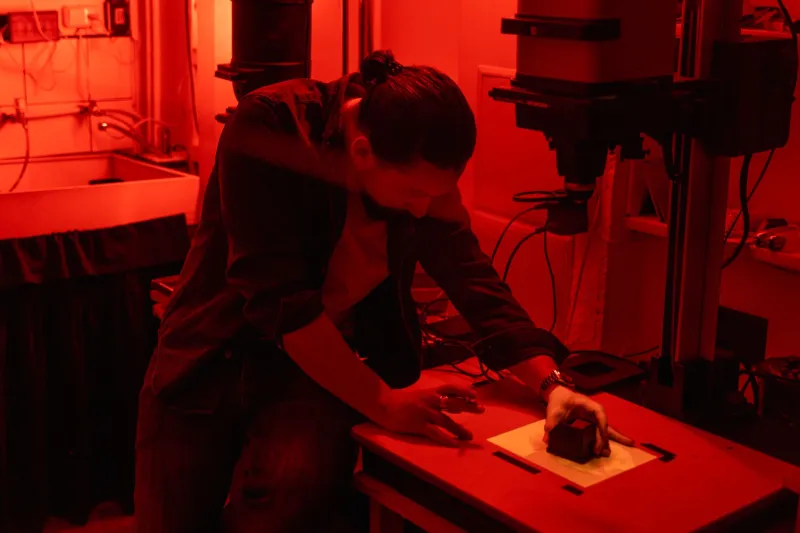
In a converted warehouse studio on the outskirts of Nashville, Tennessee, a photographer stands over a shallow tray of silver nitrate solution, carefully submerging a glass plate coated in pale, syrupy collodion. She has perhaps ten minutes before the chemistry shifts and the moment is lost. There is no undo button here. There is no histogram to consult, no bracketing to fall back on. There is only the plate, the light, and the irreversible passage of time.
This is wet plate collodion photography — a process invented in the early 1850s, refined during the Civil War era, and now experiencing a remarkable resurgence among American image-makers who have grown weary of what one practitioner calls "the infinite perfectibility of the digital file."
A Process That Demands Everything
The wet plate collodion method is not for the impatient. A photographer must coat a metal or glass substrate with collodion — a viscous solution of nitrocellulose dissolved in ether and alcohol — then sensitize it in a bath of silver nitrate, expose it in the camera while still wet, and develop it within minutes before the chemistry dries and becomes inert. The resulting image, whether a tintype on blackened iron or an ambrotype on glass, is entirely unique. No two plates are identical. Streaks, halos, vignetting, and the occasional chemical bloom are not errors to be corrected; they are the fingerprints of the process itself.
For photographers accustomed to the frictionless efficiency of modern digital capture, the learning curve is steep and the failure rate is humbling. Yet that very difficulty appears to be a significant part of the appeal.
"When I'm working with wet plate, every single decision carries genuine consequence," explains a practitioner based in Portland, Oregon, who transitioned from commercial digital photography to full-time wet plate portraiture. "There's a gravity to the process that changes how I see. It changes how my subjects behave in front of the camera. Everyone slows down."
From Studio Walls to State Fair Midways
The revival is not confined to fine art studios and gallery walls. Across the country, a growing number of photographers have taken the wet plate process on the road, setting up traveling darkrooms at state fairs, historical reenactments, and folk festivals — echoing the itinerant portrait photographers of the 1860s who carried their equipment by wagon from town to town.
At the Iowa State Fair, visitors line up for tintypes produced in a horse trailer converted into a fully functional darkroom. The wait can exceed an hour. Subjects emerge from the experience holding a small, cool metal plate bearing their image — an object that will not fade in a cloud server, will not be deleted by accident, and carries a physical weight that a digital file simply cannot replicate.
This tactile dimension is not incidental. It speaks to something deeper about the relationship between image and object that digital photography, for all its extraordinary capabilities, has largely dissolved. A wet plate is not a representation of a moment; in a very real sense, it is the moment — light that struck the subject's face, converted through chemistry into a permanent silver image on a surface you can hold in your hands.
The Tension Between Eras
It would be too simple to frame the wet plate revival as mere nostalgia or contrarianism. The photographers engaged in this work are not, by and large, rejecting contemporary visual culture wholesale. Many maintain active digital practices and social media presences. Several have used Instagram — perhaps the most algorithmically optimized image platform ever devised — to build substantial audiences for work produced through a process that predates the telephone.
The tension between these two realities is, in fact, part of what makes the movement culturally interesting. A wet plate image shared on a screen loses something essential in the translation. The depth of a well-made ambrotype, the way light seems to emanate from within the glass rather than merely reflecting off its surface, cannot be fully conveyed by a JPEG. Practitioners are keenly aware of this paradox, and many speak of it as a deliberate provocation — an invitation for viewers to seek out the physical object, to understand that some experiences of light and image exist beyond the reach of a screen.
"I want people to come and hold the plate," says a Brooklyn-based photographer whose wet plate portraits of New York City residents have garnered significant critical attention. "I want them to understand that this isn't a filter. This is chemistry. This is physics. This is light behaving exactly as it always has, captured in a way that no software update will ever change."
What the Slow Plate Reveals
There is a philosophical dimension to the wet plate revival that rewards careful consideration. Photography, at its origin, was a technology of astonishment — a means of fixing light itself, of making the ephemeral permanent. Over the subsequent century and a half, the mechanics of that miracle became so efficient and so ubiquitous that the astonishment largely evaporated. We produce images now with a thoughtlessness that would have been inconceivable to a daguerreotypist of the 1840s.
Wet plate collodion restores the astonishment. It forces the photographer to be present — chemically, intellectually, and emotionally — in a way that few contemporary processes require. The image that emerges from the developer is genuinely surprising, even to experienced practitioners. The chemistry has its own intentions, and the photographer negotiates with them rather than overriding them.
This quality — call it productive unpredictability — produces images with a visual character that is immediately recognizable yet impossible to simulate convincingly. Artificial intelligence can approximate many photographic styles. It cannot replicate the specific way silver nitrate responds to a particular studio's humidity on a particular afternoon in October.
Light That Lasts
At Clor Images, we have long held that the most powerful photographs are those in which light does not merely illuminate a subject but actively participates in the creation of meaning. The wet plate collodion process, with its luminous silver surfaces and its irreducible physicality, represents one of the most direct expressions of that principle in the entire history of the medium.
The American photographers carrying this tradition forward are not retreating from the present. They are, rather, insisting on a standard of intentionality and material honesty that the present would do well to absorb. In their darkrooms — fragrant with ether, lit by amber safelights, governed by the clock rather than the algorithm — they are asking a question that every serious image-maker must eventually confront: what is a photograph for, and what must it cost to matter?
The wet plate answers with a luminous, one-of-a-kind plate of silver and shadow. No two alike. No going back. Exactly as it should be.