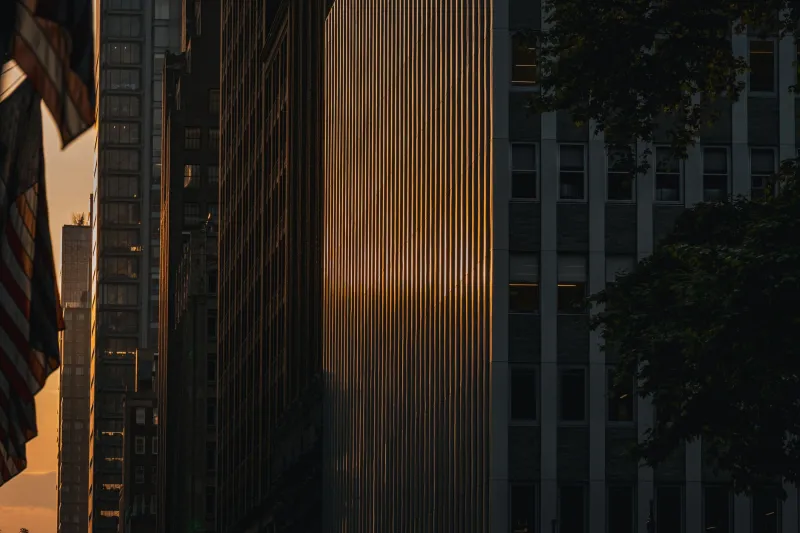
Strip Away the Spectrum: The Enduring Power of Monochrome Photography in an Age of Infinite Color
We live in an era of unprecedented chromatic abundance. Camera sensors capture billions of colors. Editing software offers infinite gradations of hue and saturation. Social media algorithms, studies suggest, favor bright, saturated imagery. The pressure — whether commercial or social — to produce vivid, color-rich photographs has never been greater.
And yet, something is often lost in all that richness.
This is not a nostalgic argument for returning to the past. It is a practical and philosophical case for the deliberate, considered use of black and white photography — not as a filter applied in post-production as an afterthought, but as a fundamental creative commitment that reshapes how a photographer sees, composes, and ultimately communicates.
The Illusion of More Information
There is a widespread assumption in contemporary photography that more visual information produces more impact. More color, more detail, more dynamic range — more, in general, is presumed to be better. This assumption deserves scrutiny.
Color, for all its expressive power, is also a distraction. It directs the viewer's eye along paths that may have nothing to do with the photographer's intent. A bright green jacket on a background subject can pull attention away from the face of the primary subject. An overly saturated sky can dwarf a foreground that contains the actual emotional content of the image. Color, in short, competes.
Black and white eliminates that competition. When color is removed, the viewer has no choice but to engage with what remains: the quality of light falling across a surface, the geometry of shadows, the texture of skin or stone or fabric, and the compositional relationships between elements within the frame. These are the true bones of a photograph, and monochrome makes them visible.
The American Tradition: Adams, Lange, and the Grammar of Grey
The United States has produced some of the most consequential monochrome photographers in the history of the medium, and their work remains instructive not merely as historical artifact but as active creative guidance.
Ansel Adams, working across the American West from the 1920s onward, developed what he called the Zone System — a precise, methodical approach to controlling tonal values in black and white photography. His images of Yosemite Valley and the Sierra Nevada are not simply landscapes. They are exercises in the mastery of light and shadow, in which every tone from pure black to paper white is placed with deliberate intention. Adams understood that the absence of color was not a limitation but a clarification. Without hue to distract, the viewer was drawn directly into the drama of light itself.
Dorothea Lange brought a different but equally rigorous approach to monochrome. Her documentary work during the Great Depression — most famously the 1936 photograph known as Migrant Mother — used the tonal language of black and white to strip away everything extraneous and place raw human dignity at the center of the frame. It is difficult to imagine that image in color. Color would have introduced period detail, regional specificity, the distraction of a particular shade of clothing. In black and white, the photograph becomes universal. It becomes timeless.
This is the deeper argument for monochrome: it reaches toward the permanent rather than the momentary.
What You Learn When You Remove Color
Shooting exclusively in black and white, even for a limited period, produces a measurable shift in how a photographer approaches a scene. Without the possibility of relying on color contrast or chromatic interest to carry an image, the photographer is forced to find other means of creating visual structure.
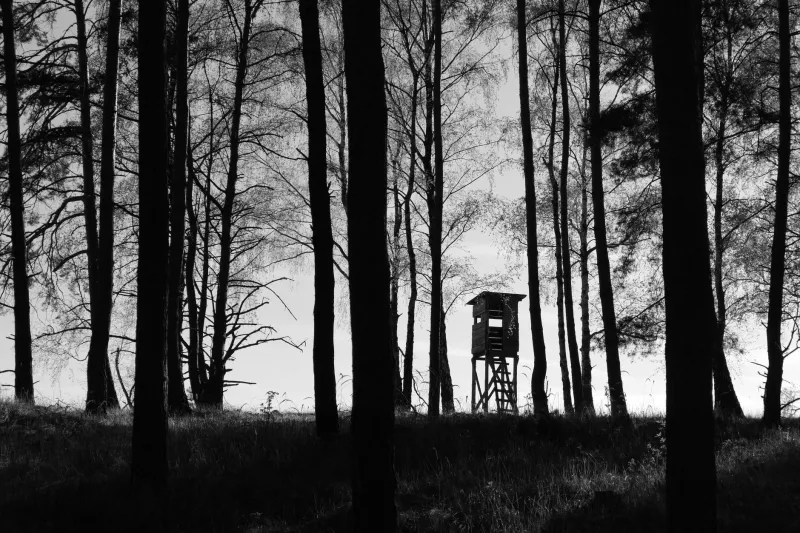
Light direction becomes paramount. The angle at which light strikes a subject determines the depth and character of shadows, and shadows are the primary sculptural tool available to the monochrome photographer. Side lighting reveals texture. Backlighting creates silhouettes and separates subjects from backgrounds. Flat frontal lighting, which can be forgiven in color work because of chromatic interest, becomes immediately problematic in black and white because it flattens form.
Composition, similarly, demands greater precision. The eye in a monochrome image travels along tonal pathways — from light areas to dark areas, from high contrast edges to smoother gradations. A photographer who understands this can guide the viewer through an image with considerable control. One who does not will produce images that feel directionless and flat.
Texture, often undervalued in color photography, becomes a primary expressive element. The grain of weathered wood. The pores of human skin. The roughness of a concrete wall. In black and white, these surfaces speak.
The Counterargument, and Why It Falls Short
The most common objection to black and white photography is that it is inherently limiting — that the photographer is voluntarily discarding a significant portion of the information available to them. This objection treats photography as an act of recording rather than an act of interpretation, and therein lies its error.
Photography has never been a neutral transcription of reality. Every decision a photographer makes — where to stand, when to press the shutter, how to frame the subject, how to process the image — is an interpretive act. Black and white is simply one more layer of interpretation, and a particularly powerful one, because it so clearly signals to the viewer that what they are seeing is a constructed vision rather than a transparent window.
Furthermore, the argument that color provides more information assumes that more information serves the photograph's purpose. Often, it does not. The emotional core of many images is better served by reduction than by accumulation.
A Challenge Worth Accepting
For photographers who have never committed to a sustained period of monochrome work, the following challenge is offered in the spirit of genuine creative development: spend one calendar month shooting exclusively in black and white.
If your camera allows it, set the picture profile to monochrome so that you see black and white images on your LCD screen in real time. This is important — reviewing color images and converting them to black and white later is a different exercise. Seeing in black and white as you shoot rewires your compositional instincts at the source.
During that month, study the tonal quality of light rather than its color. Seek out strong directional light, deep shadows, and scenes with clear tonal contrast. Photograph subjects that are rich in texture — architecture, portraiture, natural landscapes, street scenes. Review your images critically, asking not whether they are technically correct, but whether the tonal relationships within the frame serve the story you intended to tell.
At the end of the month, return to color photography. You will find, almost certainly, that you see differently. The habits of observation developed in monochrome — the attention to light direction, tonal structure, compositional weight — do not disappear when color returns. They become integrated into a more rigorous and intentional visual practice.
The Quiet Argument
Black and white photography does not shout. It does not seduce with the immediate appeal of a saturated sunset or a vivid field of wildflowers. It asks something of the viewer — patience, attention, a willingness to look past the surface.
In that sense, it is perhaps the most honest form of photography. It makes no promises it cannot keep. What you see is light, shadow, and the world reduced to its essential forms. At Clor Images, we hold that this kind of vision — stripped of embellishment, committed to structure — represents not a diminishment of the photographic art, but one of its highest expressions.