After Midnight: How Darkness Became America's Most Compelling Canvas
After Midnight: How Darkness Became America's Most Compelling Canvas
There is a moment, somewhere around 2 a.m. on a rain-slicked street in downtown Chicago or beneath a Nevada sky dense with stars, when a photographer stops thinking about exposure charts and simply begins to see. The city hums at a different frequency. Shadows acquire weight. Neon reflections pool on asphalt like spilled paint. It is in precisely these hours that a growing number of American photographers have chosen to do their most serious work — and the images they are producing are reshaping conversations about what photography, at its most elemental, can accomplish.
Night photography in the United States has moved well beyond the realm of technical experiment. What was once regarded as a specialized pursuit — the domain of hobbyists chasing star trails or urban explorers documenting abandoned infrastructure — has evolved into something considerably more ambitious. It is, increasingly, a distinct artistic discipline with its own aesthetics, its own community, and its own unapologetic claim on the medium's expressive possibilities.
A Philosophy Built on Absence
To understand why night photography resonates so deeply with a certain kind of visual artist, it helps to consider what darkness actually removes from a scene. The obvious distractions of daytime — crowds, harsh midday shadows, the visual noise of ordinary life in full motion — dissolve after midnight. What remains is architecture stripped to its skeleton, landscape reduced to its essential geometry, and light itself transformed from a given into something rare and deliberate.
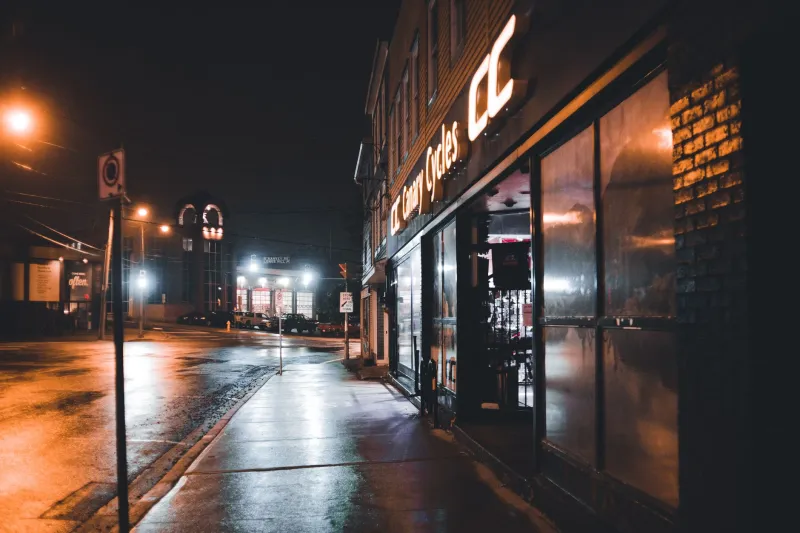
Photographers who work exclusively or primarily in low-light conditions often describe the experience in near-philosophical terms. The darkness, they argue, does not obscure the world — it clarifies it. Every light source becomes meaningful. A single streetlamp casting its amber circle onto wet pavement carries a visual weight that it would never possess at noon. A diner's fluorescent interior, glowing against an empty sidewalk at 3 a.m., communicates something about American solitude that no amount of daytime shooting could approximate.
This is the central conviction animating the night photography movement: that seeing in darkness is not a compromised version of ordinary seeing, but a fundamentally different act — one that requires the photographer to abandon assumptions and approach the frame with a kind of deliberate attentiveness that daylight rarely demands.
The Technical Demands of Low-Light Work
The artistic philosophy, of course, must be supported by considerable technical fluency. Night photography presents a set of challenges that separate it sharply from conventional practice, and mastering them is no casual undertaking.
Long exposures — often ranging from several seconds to multiple minutes — are the foundation of most night work. This demands an intimate understanding of how sensors accumulate light over time, how noise behaves at elevated ISO settings, and how movement within the frame interacts with extended shutter speeds. A passing car becomes a river of light. A cloud drifting across the moon introduces a soft, unpredictable texture to the sky. These are not accidents to be corrected; for skilled night photographers, they are compositional elements to be anticipated and embraced.
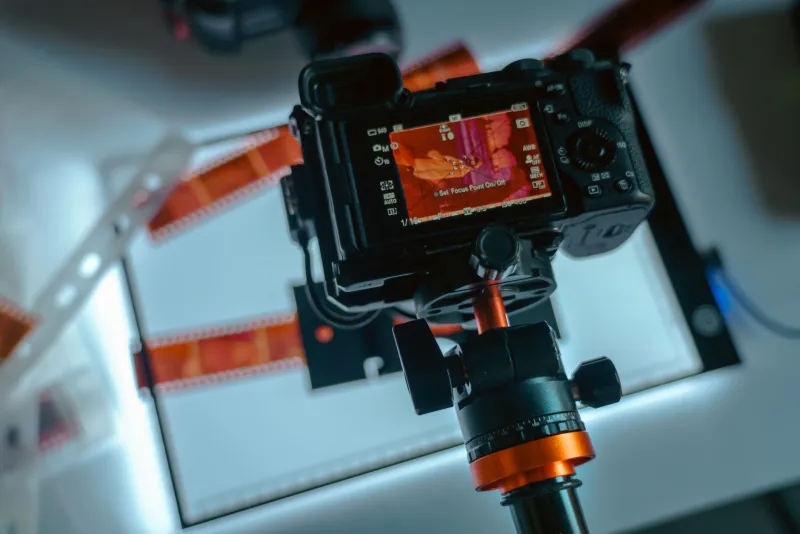
Equipment choices carry heightened consequence after dark. Full-frame mirrorless systems from manufacturers such as Sony and Nikon have become increasingly popular within the community, largely because of their exceptional high-ISO performance. Wide-aperture prime lenses — particularly those in the 14mm to 35mm range — allow photographers to gather maximum light while preserving sharpness across expansive scenes. A sturdy tripod is non-negotiable, and many practitioners carry remote shutter releases to eliminate camera shake entirely during long exposures.
Post-processing plays a significant role as well. Night images frequently require careful noise reduction, shadow recovery, and luminosity adjustments that differ substantially from the editing workflow applied to daylight photographs. Programs such as Adobe Lightroom and Capture One offer powerful tools for this purpose, though the most accomplished night photographers develop highly individualized approaches to finishing their work — preserving the grain and imperfection that give low-light images much of their character.
America After Dark: The Subjects That Define the Movement
The United States offers night photographers a landscape of extraordinary variety. Urban environments — New York, Los Angeles, New Orleans, Detroit, Las Vegas — present a constant theater of artificial light: neon signage, illuminated skyscrapers, the rhythmic pulse of traffic. Each city has its own nocturnal personality, its own palette of artificial glow, its own cast of nighttime inhabitants who move through the frame with a particular kind of unhurried purpose.
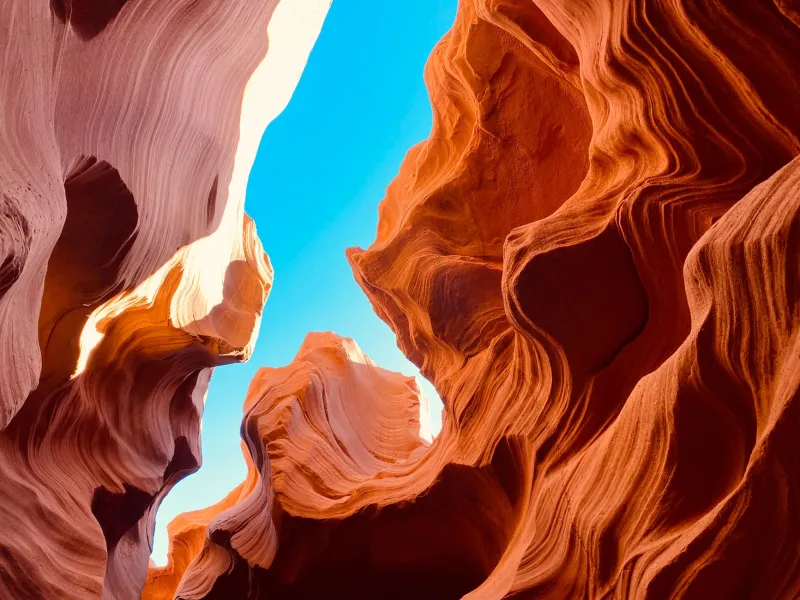
Beyond the cities, the American West has become something of a pilgrimage destination for astrophotographers and landscape shooters drawn to the continent's darkest skies. Death Valley National Park, the high desert plateaus of Utah, and the remote stretches of Wyoming and Montana offer conditions where the Milky Way appears not as a faint smear but as a vivid, structural presence arching overhead. Photographers willing to drive several hours from the nearest metropolitan area — and to sleep in their vehicles so they can be in position before moonrise — are rewarded with images of almost hallucinatory clarity.
Rural America, often overlooked by photographers chasing urban drama, yields its own nocturnal rewards. A grain elevator lit by a single security light against a Kansas sky. A closed roadside diner on a two-lane highway in Mississippi, its sign still glowing though the doors locked hours ago. These images speak to themes of persistence, isolation, and the quiet dignity of ordinary places — themes that American photography has always returned to, and that darkness renders with particular emotional directness.
Community, Collaboration, and the Shared Language of Dark
One of the more striking aspects of the contemporary night photography movement is the sense of community that has developed around it. Online platforms — Instagram and dedicated forums chief among them — have allowed practitioners across the country to share techniques, locations, and feedback with a speed and openness that earlier generations of photographers could not have imagined.
Workshops focused specifically on night and low-light work have proliferated in recent years, attracting participants from a wide range of backgrounds and experience levels. Instructors lead small groups through urban neighborhoods or remote wilderness areas, teaching not only the technical fundamentals but also the subtler skills of reading a scene in darkness — learning to identify where the interesting light will fall before it actually does, developing the patience to wait for the precise moment when all the elements of a composition align.
This collaborative spirit reflects something genuine about the night photography community's self-understanding. Practitioners tend to regard themselves as participants in a shared project of discovery, collectively mapping a version of America that most people never witness because they are, quite sensibly, asleep.
What Darkness Reveals
At its most compelling, night photography does something that few other approaches to the medium can claim: it makes the familiar genuinely strange. A street corner photographed at noon is a document. Photographed at 2 a.m., under a single sodium-vapor lamp, with a thirty-second exposure rendering the empty sidewalk in exquisite detail, it becomes something closer to a meditation.
The photographers driving this movement understand that they are not simply working in difficult conditions — they are working toward a different kind of truth. Where light meets vision, the results are always interesting. But where light is scarce, carefully sought, and hard-won, the images that emerge carry a weight and a resonance that feel, in the best cases, like genuine revelation.
America after dark is waiting. The camera, as ever, does not sleep.