Centering the Frame: How a New Generation of American Photographers Is Building Visual Archives for Communities the Mainstream Never Saw
The history of American documentary photography is, in significant part, a history of who held the camera and who stood in front of it. For most of the twentieth century, the dominant institutions—wire services, major magazines, government agencies, and gallery systems—determined which communities were deemed worthy of visual attention and, more consequentially, which were not. The result was an archive that reflected the priorities of a narrow cultural establishment rather than the full breadth of American life.
That archive is now being actively supplemented—and in some cases corrected—by photographers who are making intentional choices about where they point their lenses and, just as importantly, how they conduct themselves once they arrive.
The Question of Access and Its True Cost
Every photographer who works in communities outside their own background eventually confronts the same fundamental question: what does it cost the people in this frame to be seen by the people who will view this image? That question, once rarely asked in formal photography education, has become central to how a new generation of practitioners frames their entire practice.
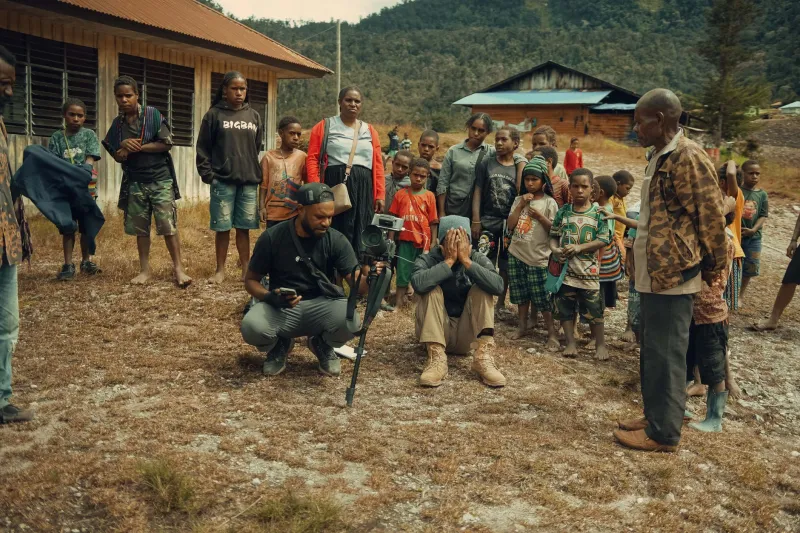
The photographers doing the most substantive work in underrepresented American communities are distinguished not primarily by their technical skills—though those are often considerable—but by their willingness to subordinate their own narrative instincts to the priorities of the people they photograph. This requires a reorientation that many photographers trained in traditional editorial models find genuinely difficult. The decisive moment, as a concept, assumes a photographer who arrives, observes, and departs. The trust-based model assumes something far more demanding.
In practice, this often means spending weeks or months in a community before making a single significant image. It means returning after the initial visit, and after the one after that. It means sharing work before publication, discussing how images will be used, and accepting that some photographs—however compelling—will not be made because the subject has declined. This is not a constraint on the photography. For the practitioners who have embraced it, it is the photography.
Rural America and the Visual Deficit
The rural United States has been among the most consistently misrepresented territories in American visual culture. When rural communities do appear in mainstream photography, they tend to appear through one of two frames: poverty tourism or political symbolism. Neither is adequate, and communities that have experienced both are understandably skeptical of photographers who arrive with an agenda already formed.
Photographers working against this grain in rural Appalachia, the Mississippi Delta, the Great Plains, and the rural Southwest describe a process of sustained presence that has more in common with oral history practice than with conventional assignment photography. They attend community events that will never generate publishable images. They help with things that have nothing to do with photography. They become, over time, recognizable faces rather than visiting observers.
The images that emerge from this kind of practice have a quality that is difficult to describe technically but immediately legible to viewers. They carry a sense of permission—not just legal permission, but the deeper permission that comes from genuine mutual understanding. The people in these photographs are not performing for an outside gaze. They are present within their own lives, and the camera has been allowed to witness that.
Tribal Nations and the Sovereignty of the Image
For photographers working on and around Native American tribal lands, the question of who controls the image is not philosophical—it is jurisdictional. Tribal nations are sovereign entities with the authority to establish their own protocols for photography, and those protocols vary significantly from nation to nation.
Photographers who have built long-term working relationships within tribal communities speak consistently about the importance of understanding that their presence is a privilege extended by the community, not a right derived from their professional credentials. The images that result from these relationships are among the most significant being made in American documentary photography today precisely because they exist outside the extractive model that has historically characterized outside photographic attention to Indigenous communities.
Some photographers have gone further, working as collaborators with tribal cultural preservation offices to create archives that are owned and controlled by the communities themselves. In these arrangements, the photographer's role is closer to technician than author—a shift in creative identity that requires genuine humility but produces something of lasting cultural value.
Urban Communities and the Problem of the Single Story
In American cities, the challenge facing photographers committed to equitable representation is somewhat different. Urban communities of color are not invisible in mainstream photography—they are, in many cases, heavily photographed. The problem is the narrowness of the stories those photographs tell.
Neighborhoods that appear in the visual record primarily in the context of violence, poverty, or crisis have been photographed extensively without being truly seen. The photographers working to change this dynamic are not disputing that difficult realities exist in these communities. They are insisting that difficult realities are not the sum total of any community's existence, and that a visual archive built exclusively on those realities is a distortion.
The corrective work being done in cities like Detroit, Baltimore, New Orleans, and Fresno involves photographing the full texture of community life—celebration, labor, creativity, grief, humor, and aspiration—with the same commitment and technical seriousness that photojournalists have historically reserved for crisis coverage. The goal is not to produce a counter-narrative that ignores hardship but to produce a complete one that refuses reduction.
Building Archives That Belong to Someone
One of the most significant developments in this area of practice is a growing emphasis on ensuring that the archives being created are genuinely accessible to and owned by the communities they document. Cloud-based community archives, partnerships with local libraries and historical societies, and print donation programs are all mechanisms that photographers in this space are using to ensure that their work does not simply disappear into gallery walls or institutional collections.
This is, in a sense, the most radical aspect of the whole enterprise. Photography has always produced objects—images—that can be separated from their subjects and circulated in contexts those subjects never anticipated or consented to. The photographers most committed to equitable practice are attempting to build structural safeguards against that possibility, creating not just images but systems of accountability around those images.
The work is slow, sometimes frustrating, and rarely produces the kind of singular dramatic images that win awards in the conventional photography world. But it is producing something more durable: a visual record of American life that will be recognizable to the people who lived it.