Same Ground, Different World: The Photographers Returning to America's Changing Landscapes to Prove What Numbers Cannot
There is a particular kind of discipline required to stand in the same spot twice—once with hope, once with reckoning. For a growing cohort of American photographers, that discipline has become a vocation. Armed with archival prints, GPS coordinates, and decades of patience, they return to the places they have already photographed and make the comparison unavoidable.
The resulting bodies of work occupy a space where documentary photography meets environmental testimony. They are not protest images in the conventional sense. They carry no signs, no crowds, no confrontation. What they carry instead is something far more unsettling: the quiet, irrefutable evidence of transformation.
The Methodology of Return
The practice has roots in the work of nineteenth-century survey photographers who documented the American West for government expeditions. Those glass-plate images, largely forgotten in institutional archives, have become the first half of a before-and-after story no one originally intended to tell.
Contemporary photographers working in this tradition treat those archival images as both inspiration and obligation. The process is painstaking. Researchers cross-reference historical photographs with topographic maps, study shadow angles to determine the season and approximate time of day, and sometimes spend multiple days at a location simply identifying the precise vantage point where a predecessor once stood. Only then does the camera come out.
The goal is not aesthetic similarity for its own sake. It is evidentiary consistency. When the framing matches, when the focal length approximates the original, when the season aligns—the only meaningful variable that remains is time. And time, in these images, is devastating.
Glacier Country: The Most Legible Record
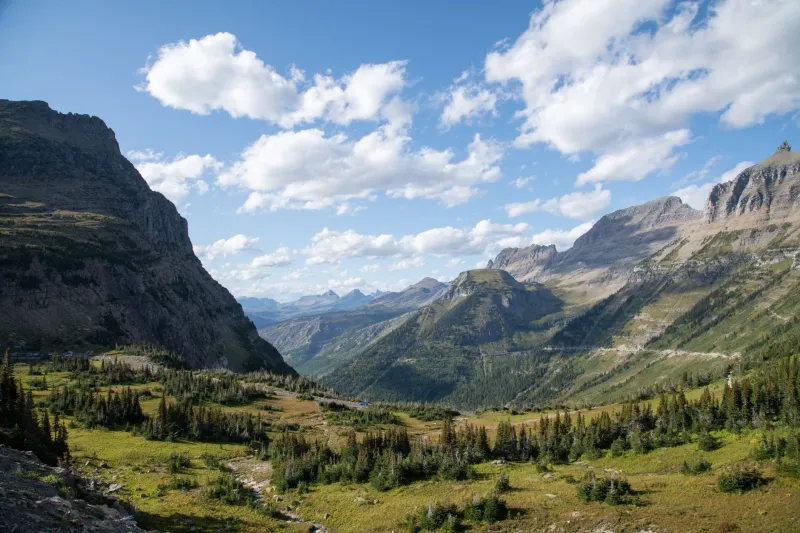
Few subjects have yielded more visually arresting comparative work than the glaciers of Montana, Alaska, and the Pacific Northwest. Glacier National Park, which once contained an estimated 150 named glaciers, now holds fewer than thirty that meet the scientific threshold for that designation. Photographers who have made the park a recurring destination over the past two decades have documented this retreat with a consistency that has given their work the weight of a longitudinal study.
What distinguishes the photographic record from the scientific one is the quality of presence. A graph showing ice volume decline communicates a quantity. A photograph showing a rock face that was buried under hundreds of feet of ice in 1985 and now stands bare in afternoon sun communicates something closer to grief. The visual cortex processes that information differently than the analytical mind processes a statistic, and photographers working in this space understand that distinction as a core part of their practice.
Several photographers have formalized their return trips into structured projects with fixed intervals—annual visits that now span fifteen or twenty years, creating not just a before-and-after but a frame-by-frame record of recession. The cumulative effect of viewing these sequences is disorienting in a productive way. The viewer becomes aware, perhaps for the first time, of geological time compressed into human time.
Coastlines and the Grammar of Erosion
Along the Gulf Coast, the Outer Banks of North Carolina, and the barrier islands of Louisiana, another generation of photographers is working with a different kind of change—one measured not only in decades but in storm seasons. The erosion of American coastlines presents a visual record that is simultaneously slower and more violent than glacial retreat.
Photographers who have committed to these territories over long periods often describe a complicated relationship with their subjects. Communities that once stood on solid ground are now photographed from boats. Roads that appeared in early work now disappear into water at their far ends. Structures that anchored a visual composition in one decade are simply absent in the next.
The challenge these photographers face is one of narrative control. Coastal erosion is politically contested terrain in the United States, and images of disappearing shorelines are often co-opted by advocacy campaigns in ways their makers did not intend. Several photographers have spoken publicly about the tension between wanting their work to catalyze awareness and wanting to preserve the documentary neutrality that gives the images their authority. The photograph that feels like propaganda, however accurate, loses something essential.
The Forest as Chronicle
In the forests of the American West, comparative photography takes on a different character. The transformation here is not always one of subtraction. Sometimes it is one of replacement—the old-growth replaced by scrub, the dense canopy replaced by the open sky that follows a megafire.
Photographers documenting forest change work within a visual vocabulary that is less immediately legible to general audiences than a shrinking glacier. The before-and-after of a forest requires a more educated eye to fully comprehend. This has pushed some practitioners toward more explicit educational framing—pairing their images with botanical annotations, working with naturalists, or sequencing their work to guide viewers through what they are actually seeing.
The most effective of these projects treat the forest as a portrait subject, returning to individual trees or specific groves the way a portraitist returns to a long-term subject. The intimacy of that approach—the sense that these are not generic landscapes but specific, known places—translates powerfully to viewers.
The Ethics of Witnessing
Any honest examination of this genre must acknowledge its ethical complexities. Photographers who spend careers documenting environmental loss are, by definition, watching that loss happen. The question of complicity—of whether extended documentation without intervention constitutes a form of passive acceptance—is one that practitioners in this field take seriously.
Many have arrived at a similar answer: the image is the intervention. The photograph that makes a viewer feel the weight of what is being lost performs a function that no direct action by the photographer could replicate. The scale of the problem demands witnesses who are present, consistent, and skilled enough to translate what they see into something that reaches people who will never stand in those places themselves.
There is also a preservation argument that transcends advocacy. These images are archives. Whatever the political or environmental outcome, the photographic record of what the American landscape looked like at specific coordinates in specific years will outlast the debate. Future generations will have access to a visual inheritance that raw data cannot provide.
Light as Evidence
At its core, this practice is an extension of photography's oldest claim: that light recorded on a surface tells the truth. The photographers returning to America's changing landscapes are not making arguments. They are making records—and trusting that the record, set beside its predecessor, will speak for itself.
In a media environment saturated with contested claims and manipulated imagery, that fidelity to place and repetition carries unusual authority. The camera does not remember the way it was. It only records the way it is. And sometimes, that is the most powerful statement available.