The Eloquence of Empty: How America's Most Celebrated Photographers Let Silence Do the Talking
The Eloquence of Empty: How America's Most Celebrated Photographers Let Silence Do the Talking
There is a persistent instinct among photographers at every level of experience to fill the frame. The subject is there, the light is cooperating, the moment is unfolding — and so the natural impulse is to move closer, to crowd out the distractions, to make sure nothing essential is lost to the margins. It is a reasonable instinct. It is also, in the hands of America's most thoughtful image-makers, frequently the wrong one.
Negative space — the deliberate, considered emptiness that surrounds or exists alongside a primary subject — is among the most sophisticated tools available to any photographer. It is not absence born of carelessness. It is absence as argument. When deployed with intention, the open areas of a frame do not merely frame a subject; they amplify it, contextualize it, and in some cases become the subject themselves.
What Negative Space Actually Means
The term borrows from the visual arts, where it has long described the area around and between the subjects of an image. In painting and sculpture, negative space is taught as a counterweight to positive form — the shape defined by what is not there. Photography inherits this vocabulary, but adds a dimension that static art cannot: time. A photograph's negative space does not simply exist. It speaks to the moment just before, or the silence just after.
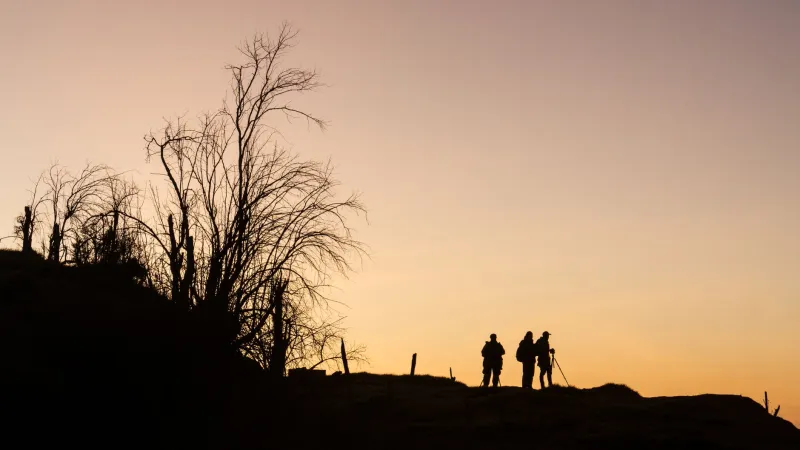
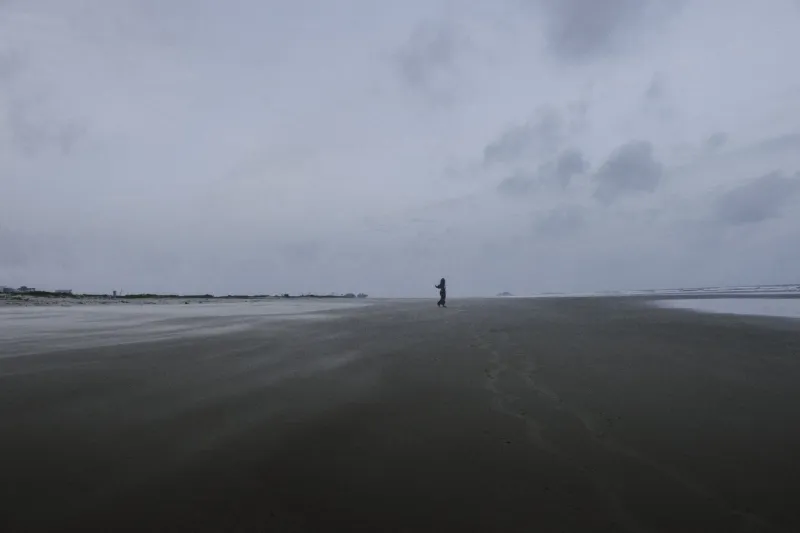
In practical terms, negative space in photography might manifest as a vast gray sky above a solitary figure standing at the edge of a Kansas wheat field, or as the white expanse of a salt flat stretching away from a single weathered fence post somewhere in the Nevada desert. It might be the dark corridor of shadow that opens beside a shaft of light falling on a child's face in a Chicago apartment hallway. In each case, the emptiness is not incidental. It has been chosen, framed, and preserved with the same care a sculptor applies to the stone they remove.
The Discipline of Restraint
American photographers who have built reputations on this compositional philosophy frequently describe the same foundational challenge: resisting the edit that feels safer. The instinct to tighten a crop, to bring the subject forward, to eliminate the "wasted" portions of a frame is deeply conditioned. Photography education, at its most basic level, emphasizes filling the frame as a corrective against timid or unfocused composition. Learning when that rule deserves to be set aside is a more advanced and harder-won skill.
For photographers working in the American landscape tradition — a lineage that stretches from Ansel Adams's monumental western vistas through to contemporary practitioners documenting the plains, the bayous, and the industrial Midwest — negative space is often the mechanism by which scale is communicated. A lone grain elevator photographed against a flat, overcast sky does not require a telephoto lens pulling in its details to convey meaning. The meaning lives in the relationship between that vertical form and the horizontal emptiness pressing in on all sides. The viewer's eye travels the distance the photographer has left for it to travel, and arrives at the subject having understood something about isolation, endurance, and the particular character of American space.
Portraits and the Power of Surrounding Silence
Negative space operates differently — but no less powerfully — in portraiture. Where landscape photographers use open terrain and sky to establish scale and solitude, portrait photographers who employ significant negative space are making a more intimate argument. They are suggesting that the space surrounding a person is not empty at all. It is charged with what that person carries: their history, their grief, their unspoken interior life.
Consider the compositional choices made by photographers working in documentary portraiture across the American South, where subjects are frequently photographed in environments that dwarf them — on wide porches, in cavernous barns, against the unbroken facade of a concrete wall. The subject occupies a corner of the frame, or a narrow vertical band on one side, while the rest of the image breathes around them. This is not an accident of framing. It is a statement about the weight of the surrounding world, about the way certain lives exist in relationship to spaces that are indifferent to them.
What Gets Left Out Is a Creative Choice
The compositional philosophy at work here extends beyond technical execution into something closer to editorial courage. Deciding what to exclude from a frame is, in many respects, a more consequential decision than deciding what to include. Inclusion is instinctive. Exclusion requires conviction.
Photographers who work extensively with negative space often describe their editing process in terms of what they resist rather than what they pursue. They resist the crop that tightens. They resist the angle that eliminates the open sky. They resist the impulse to explain too much — to make the image's meaning so legible that the viewer has no work left to do. The open space in a frame is an invitation. It asks the viewer to bring something of themselves to the image, to complete the emotional circuit the photographer has deliberately left open.
This is, in essence, the difference between a photograph that is looked at and a photograph that is felt. When a frame is entirely occupied — every corner serving the subject, every element contributing to a clear narrative — the viewer receives the image. When a frame contains significant negative space, the viewer enters it.
Practical Approaches for Photographers Developing This Skill
Developing a meaningful relationship with negative space begins with a simple exercise: before pressing the shutter, ask what the open areas of the frame are contributing. If the answer is "nothing," tighten the composition. But if the answer is "room to breathe," or "a sense of time," or "the feeling of distance between this person and the rest of the world," then the emptiness is earning its place.
Shooting in environments that naturally offer expansive negative space — coastal shorelines, open highways, empty urban plazas at early morning — provides useful training. These settings make the compositional conversation explicit. There is so much available emptiness that every decision about where to place the subject becomes a statement about the relationship between form and void.
Reviewing contact sheets or digital libraries with specific attention to the images that feel most uncomfortable — the ones where the subject seems too small, too marginal, too surrounded by open space — is equally instructive. Some of those images will be compositional failures. Others, on reflection, will be the most honest pictures in the set.
The Spaces Between Things
The photographers who have most fully internalized this discipline tend to describe their work in terms that sound less like technical craft and more like listening. They speak of waiting for a frame to settle, of allowing the relationship between subject and surrounding space to clarify before committing to the exposure. They describe negative space not as an absence of content but as a different kind of content — slower, quieter, and ultimately more durable.
In a visual culture saturated with images competing for immediate attention, the photograph that asks its viewer to slow down — to sit with an open sky, a long shadow, a figure at the far edge of the frame — carries a particular authority. It does not shout. It does not explain. It simply holds its silence and waits for the viewer to arrive at meaning on their own terms.
That, in the end, is what the most eloquent use of negative space achieves. It transforms a photograph from a statement into a question — and trusts the viewer to find the answer in the space between what is shown and what is left to the imagination.