Faces of the Built World: How American Photographers Are Finding Human Stories in Storefronts and Facades
There is a particular kind of attention required to photograph a building the way a portraitist photographs a face. It demands patience, an understanding of light as character, and the willingness to linger in places that most passersby dismiss without a second glance. Across the United States, a thoughtful community of photographers is developing precisely this kind of vision — one that transforms the ordinary threshold into something quietly extraordinary.
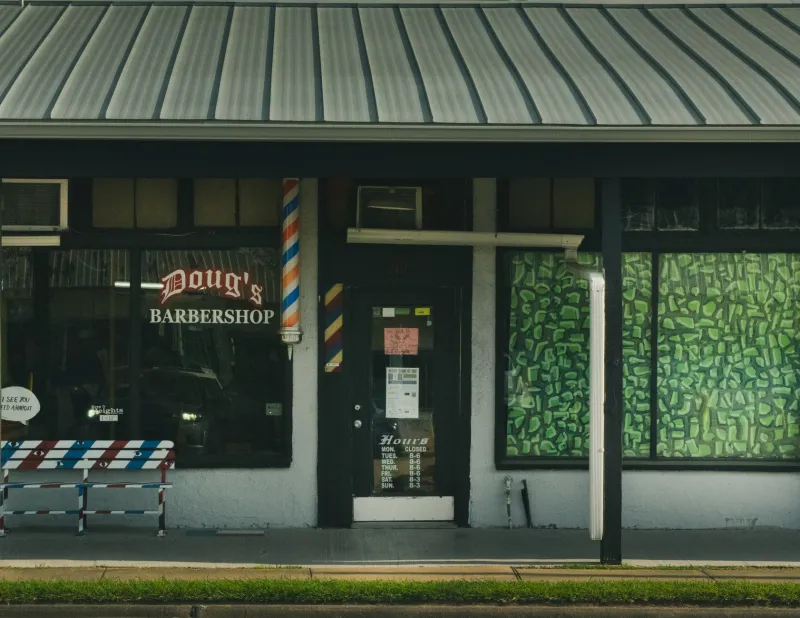
These are not photographers drawn to glass towers or celebrated civic monuments. Their subjects are barbershops in Birmingham, aluminum-sided diners along Ohio state routes, hand-painted bodegas in East Harlem, and the peeling mission-revival storefronts of small California towns. In each case, the facade is treated not as a backdrop but as the primary subject: a surface that carries the accumulated weight of community life, economic history, and human aspiration.
The Entrance as a Character Study
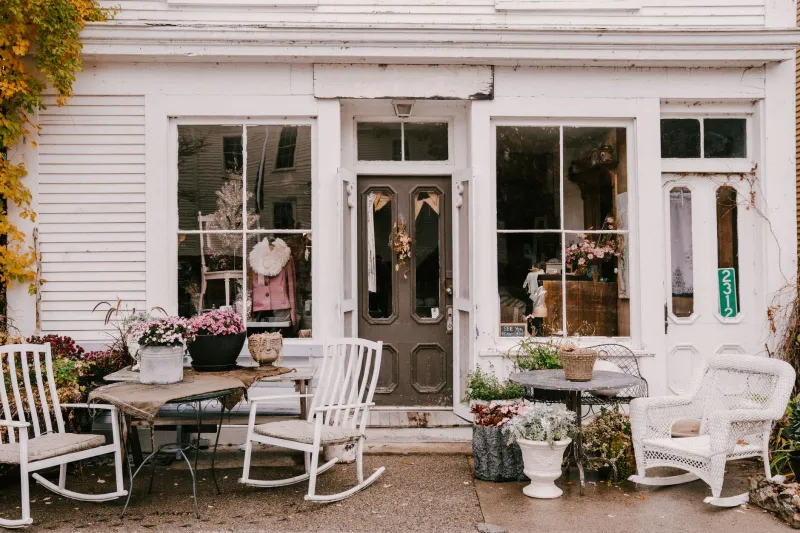
Photographer Elaine Morrow, based in Asheville, North Carolina, has spent the better part of a decade documenting the commercial architecture of rural Appalachia. Her series Open Signs focuses exclusively on the entrances of small businesses — feed stores, beauty parlors, hardware shops — many of which have operated under the same family ownership for generations.
"A doorway is a negotiation between the inside and the outside world," Morrow explains. "The paint color someone chose in 1987, the screen door that was never replaced, the handwritten hours taped to the glass — all of it is a form of self-expression that the building's occupants may not even consciously recognize."
Morrow works almost exclusively in the early morning, arriving before businesses open. The quality of light at that hour, she notes, is uncompromising in its honesty. Shadows fall at low angles, revealing textures that midday sun would flatten entirely. A rusted door hinge becomes a sculptural detail. The grain of weathered wood acquires a richness that approaches the tonal depth of a black-and-white portrait.
Her compositional approach is deliberately frontal — a direct, symmetrical framing that echoes the formal conventions of nineteenth-century portrait photography. The effect is one of dignified attention, as though the building itself is being accorded the same respect one might offer a human subject.
Perspective and the Language of Scale
On the opposite end of the geographic and aesthetic spectrum, Los Angeles-based photographer Marcus Delgado approaches urban facades through radical shifts in perspective. His ongoing project, Street Level, documents the commercial corridors of neighborhoods including Boyle Heights, Koreatown, and South Central — areas whose architectural character is rarely featured in mainstream design publications.
Delgado frequently positions his camera at near-ground level, a choice that dramatically alters the viewer's relationship to the structures he photographs. A modest taqueria entrance, seen from eighteen inches off the pavement, assumes a monumental presence. The handpainted lettering above the door looms overhead like a proclamation. The worn threshold becomes a landscape unto itself.
"I want people to feel the weight of these places," Delgado says. "These buildings have been serving their communities for decades. They deserve to be seen at a scale that matches their importance to the people who depend on them."
His use of a wide-angle lens — typically a 24mm on a full-frame camera — amplifies the sense of presence without distorting it into caricature. The resulting images are neither documentary nor purely aesthetic; they occupy a middle ground that feels both truthful and deeply considered.
Timing as Technique
For Chicago photographer Sandra Okafor, the decisive element in facade photography is not light or perspective alone, but the precise intersection of both with the rhythms of urban life. Her series First Light, Last Call captures the storefronts of Chicago's South Side at two specific moments: the half-hour before a business opens in the morning, and the half-hour after it closes at night.
The contrast between these two windows is striking. In the morning, facades carry a quality of anticipation — awnings freshly cranked open, chalk signs being written, a proprietor visible through glass as a silhouette in motion. At closing time, the same buildings take on a different register entirely: the warmth of interior light spilling onto a darkened sidewalk, the finality of a turned lock, the particular stillness of a space that has just finished its work for the day.
"Architecture is not static," Okafor argues. "The same building looks completely different depending on when you arrive. Most photographers treat the building as a fixed object. I treat it as a living participant in the day."
Her technical approach involves a tripod and careful exposure bracketing during the evening sessions, allowing her to preserve the delicate balance between interior warmth and exterior shadow. The resulting images have a painterly quality — luminous and layered — that rewards extended looking.
The Rural and the Overlooked
In the small towns of the Mississippi Delta, photographer James Whitfield has been documenting a category of facade that is rapidly disappearing: the African American-owned commercial buildings that lined the main streets of segregation-era towns. Many of these structures — former insurance offices, funeral parlors, pharmacies, and social clubs — still stand, though they have been vacant for decades.
Whitfield's photographs of these buildings are among the most emotionally complex examples of contemporary American architectural photography. He shoots on medium-format film, a choice that lends his images a density and permanence that feels appropriate to the gravity of his subject matter. His compositions are spare and unflinching: a boarded window, a painted sign barely legible beneath years of weather, a front step worn smooth by the passage of thousands of feet.
"These buildings are archives," he says. "They hold stories that aren't written down anywhere else. My job is to make sure those stories are still visible."
Practical Principles for Facade Photography
The work of photographers like Morrow, Delgado, Okafor, and Whitfield suggests several principles that any photographer can apply when approaching architectural subjects with a portraitist's sensibility.
Arrive before and after the obvious moment. The golden hour is well-understood, but the specific quality of light immediately before a business opens — or after it closes — offers a narrative dimension that midday shooting cannot replicate.
Commit to a single viewpoint. Rather than circling a building for multiple angles, identify the perspective that most honestly represents the structure's character and work within its constraints. Limitation, in this context, is a creative discipline.
Attend to the details that suggest use. Door handles worn to brightness, steps with hollowed centers, paint colors that speak to a specific decade — these details transform a building from an abstract form into evidence of lived experience.
Consider scale as a statement. The height at which you position your camera communicates a relationship between viewer and subject. A low angle confers dignity; a high angle can suggest vulnerability or diminishment. Neither is inherently correct, but the choice should be intentional.
Return repeatedly. A building photographed once is a building seen from the outside. A building photographed across seasons and times of day begins to reveal itself as something closer to a personality.
Where Light Meets Structure
At its most compelling, facade photography achieves something that transcends architectural documentation. It asks the viewer to recognize that the built environment is not neutral — that every surface carries the imprint of the people who constructed it, inhabited it, and depended upon it. The storefronts of rural Appalachia and the commercial corridors of South Los Angeles are not simply different buildings in different places. They are different expressions of the same fundamental human impulse: to mark a place as one's own, to make it welcoming, to signal through a painted door or a handwritten sign that something worth entering lies within.
For photographers willing to look with sustained attention, these thresholds offer an inexhaustible subject — one that rewards patience, technical rigor, and above all, genuine curiosity about the lives that structures hold.