What Surrounds the Subject: The Quiet Architecture of America's Most Powerful Photographs
What Surrounds the Subject: The Quiet Architecture of America's Most Powerful Photographs
There is a persistent myth in photography — that the subject is everything. The face, the gesture, the decisive moment of human expression. Yet spend an hour studying the photographs that have genuinely shaped American visual culture, and a different truth begins to emerge. The most powerful images are frequently defined not by what occupies the center of the frame, but by what surrounds it. The sky above a bowed head. The vast, indifferent plain stretching behind a family's weathered faces. The yawning mouth of an empty street that swallows a solitary figure whole.
Negative space and background composition are, in many respects, the silent grammar of photography — the structural logic beneath the emotional surface. Understanding how America's great photographers have deployed these tools is not merely an academic exercise. It is a fundamental shift in how one learns to see.
The Weight of What Is Left Unsaid
Dorothea Lange's Migrant Mother, captured in Nipomo, California in 1936, remains one of the most reproduced photographs in American history. Much has been written about Florence Owens Thompson's expression — the furrowed brow, the hand raised to her chin, the children pressing into her shoulders. Far less attention is paid to the tent canvas that occupies the background: a flat, textureless plane that offers no comfort, no context, no escape. Lange did not stumble upon that compression of space. She worked it deliberately, eliminating distracting visual information so that the viewer's eye had nowhere to rest except on the subject's face.
This is the essential function of controlled negative space: it removes the exits. When a background is busy, the eye wanders and the emotional contract between viewer and photograph weakens. When a background is stripped to its essential character — whether that is the flat grey of a canvas tent or the blown-out white of an overcast winter sky — the subject becomes inescapable.
Background as Narrative Architecture
Not all backgrounds should be minimized, however. Some of America's most celebrated photographs derive their power from the precise relationship between subject and environment — a tension that would collapse if either element were removed.
Consider the body of work produced by photographers documenting the American industrial Midwest throughout the latter half of the twentieth century. Images of steelworkers, miners, and factory laborers gain their particular authority from the massive, looming infrastructure that frames them. The subject is human and finite; the background is mechanical and vast. That contrast is not accidental. Photographers working in this tradition understood that the environment could function as a kind of visual argument — a statement about scale, labor, and the relationship between individuals and the systems that shape their lives.
In this sense, the background is not a backdrop. It is a co-author.
The Geometry of Emptiness in Urban Photography
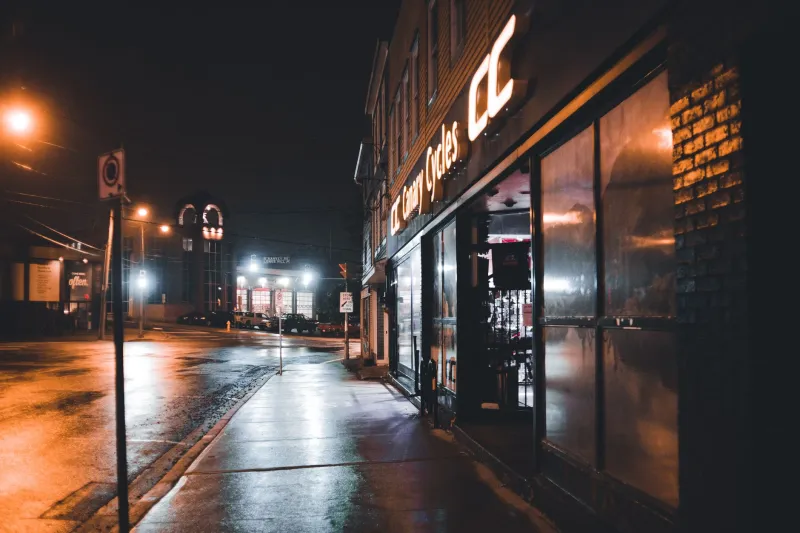
Contemporary American street photographers have developed a particularly sophisticated relationship with negative space, often using the geometric rigidity of urban architecture to create frames within frames. A subject positioned beneath a fire escape in lower Manhattan, or standing at the intersection of two alleyways in Chicago's Loop, is simultaneously isolated and enclosed — a compositional paradox that generates visual tension without requiring any additional element.
Several working photographers based in cities like Philadelphia, Detroit, and Los Angeles have spoken about the deliberate practice of scouting locations before a subject ever enters the frame. They identify backgrounds first — a particular quality of light falling across a concrete wall, the rhythm of windows marching down the side of a building, the way a sidewalk's perspective lines converge in the middle distance. Only then do they consider what kind of subject might activate the composition.
This reversal of conventional thinking — background before subject — is one of the more counterintuitive disciplines a photographer can cultivate. It demands that the environment be understood as an active compositional element rather than a passive container.
Negative Space and Emotional Register
The emotional effect of negative space is not uniform. Its character shifts dramatically depending on what type of emptiness the photographer chooses to introduce.
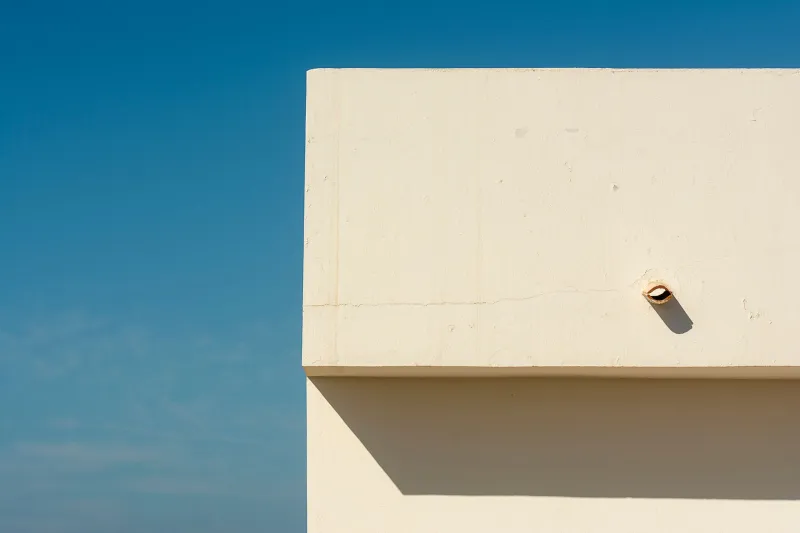
Open sky above a subject tends to communicate aspiration, vulnerability, or isolation, depending on the light and the subject's posture. A dark, undefined background — common in studio portraiture and certain documentary traditions — creates intimacy and psychological intensity, pulling the viewer closer. Blurred backgrounds achieved through shallow depth of field separate subjects from their environments in a way that feels almost tender, as though the photographer is shielding the subject from the world surrounding them.
American landscape photographers have long understood that the opposite dynamic is equally powerful. Placing a human figure small within an enormous natural environment — the Sonoran Desert, the open grasslands of the Great Plains, the fog-layered ridges of the Appalachians — uses negative space to make an argument about proportion and humility. The subject is not diminished so much as contextualized.
Practical Disciplines for Compositional Awareness
For photographers seeking to develop a more intentional relationship with negative space and background, several practices prove consistently valuable.
Read the frame before you raise the camera. Before committing to a shot, spend a moment examining the full rectangle of the scene — not just the subject. Identify what the background is communicating on its own terms. Ask whether it supports or competes with the story you intend to tell.
Move laterally before you move closer. A slight shift in position can dramatically alter the relationship between subject and background. A cluttered background can often be simplified by changing your angle rather than your focal length.
Consider the edges of the frame as seriously as the center. Experienced photographers frequently cite the edges of the frame as the location where compositional discipline is most often abandoned. What enters the corners of your image carries meaning, even when it is out of focus.
Study images you admire for their backgrounds specifically. Return to photographs that have stayed with you and ask, for the first time, what is happening in the space around the subject. The answer is rarely nothing.
The Space Between as Photographic Intention
At Clor Images, the belief that vision is as much about perception as it is about technical mastery informs how we approach the craft. The photographers who have shaped American visual history were not simply fast, or technically precise, or fortunate in their timing. They were architects of the entire frame — practitioners who understood that the space between and around their subjects was not dead air but living composition.
Negative space is, ultimately, an act of editorial confidence. It requires the photographer to trust that restraint is more powerful than accumulation, that what is removed from the frame can speak as forcefully as what remains. In an era when images compete for attention at a volume and velocity that would have been unimaginable to Lange or her contemporaries, that confidence — the willingness to leave space, to allow silence within the rectangle — may be the most distinctly human quality a photographer can bring to the work.