Imperfect Instruments: The American Photographers Rebuilding Their Practice Around Equipment the Industry Left Behind
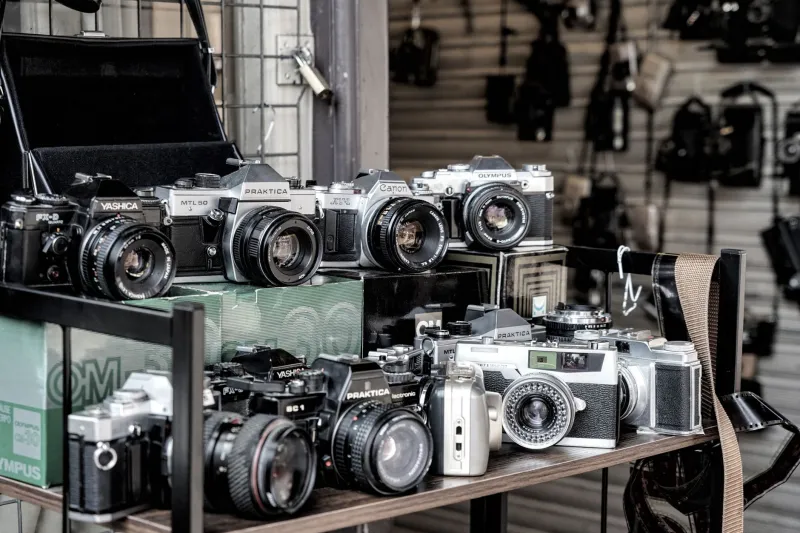
The photography industry has spent decades in devoted pursuit of perfection. Sharper lenses. Faster processors. Sensors so sensitive they can render a face in near-total darkness without visible noise. By virtually every measurable standard, the cameras available to photographers today are superior to anything that existed twenty years ago. And yet, in estate sale lots across the American Midwest, in the glass cases of pawn shops from Albuquerque to Akron, in the cardboard boxes of camera fairs held in community centers and hotel ballrooms, a growing number of photographers are searching not for perfection but for something considerably harder to define.
They are searching for character.
What Modern Cameras Have Learned to Erase
To understand why a working photographer would deliberately choose a fifty-year-old medium format camera with a fungus-clouded lens over a contemporary mirrorless system capable of 45 megapixels and in-body image stabilization, it helps to understand what that contemporary system has been designed to eliminate. Chromatic aberration. Vignetting. Lens breathing. Mechanical shutter vibration. Halation—the gentle bleeding of bright highlights into surrounding shadow areas that characterized much of the photographic output of the mid-twentieth century. All of these optical phenomena were once considered flaws. They were problems that successive generations of lens designers and camera engineers worked to solve.
For a specific community of American photographers, however, these "flaws" are not problems. They are the point.
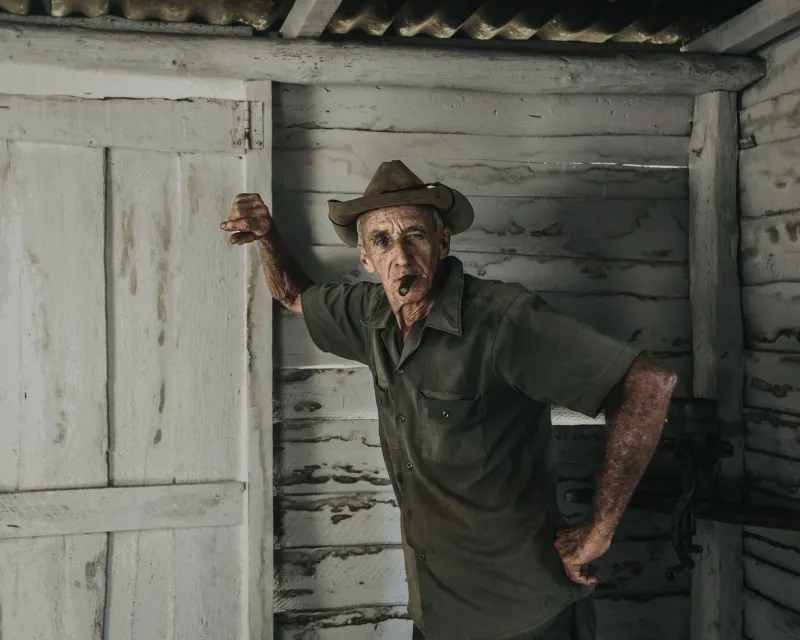
Rachel Dominguez, a portrait and documentary photographer based in San Antonio, Texas, has spent the past seven years building her practice almost exclusively around cameras and lenses manufactured before 1980. Her primary working tool is a Mamiya RB67 medium format camera paired with a selection of lenses she describes as "optically compromised in interesting ways." The soft-focus quality of her portraits—not the digital blur of post-processing, but the genuine optical softness of glass that was imprecisely ground or has developed internal haze over decades—has become her signature. Clients who come to her specifically request what she calls "the old light."
The Estate Sale Circuit
The procurement of vintage and discontinued photographic equipment has developed its own informal infrastructure in the United States. Weekend estate sales in suburban neighborhoods frequently yield cameras and lenses that have sat in closets since their original owners retired from amateur photography in the 1980s or 1990s. Camera fairs—regular events in cities including New York, Chicago, Los Angeles, and Boston—attract dealers and individual sellers offering equipment ranging from the merely outdated to the genuinely rare.
Pawn shops occupy a particular niche in this ecosystem. Equipment that arrives at a pawn shop has often had a hard life: dropped, stored improperly, repaired by someone without the appropriate tools or knowledge. For photographers who seek optical unpredictability, this history is an asset rather than a liability. A lens that has been dropped and incompletely repaired may render light in ways that no undamaged lens of the same model would. A camera with a worn shutter mechanism may produce subtle exposure variations across a frame that create tonal qualities no post-processing software can accurately simulate.
Thomas Wren, a commercial and fine art photographer in Detroit, has made the pawn shop circuit a regular part of his practice. He visits three or four shops per week, examining whatever photographic equipment has come in since his last visit. "I'm not looking for equipment in good condition," he explains. "I'm looking for equipment that's been through something. The best lenses I own have histories I'll never fully know."
Constraint as Creative Engine
Beyond the specific optical qualities that vintage and damaged equipment produces, photographers in this community consistently identify something else that draws them to obsolete tools: the productive discipline of working within severe constraints.
A fully mechanical camera—one that requires no battery and offers no automatic functions of any kind—demands that the photographer make every exposure decision consciously and deliberately. There is no evaluative metering to consult, no automatic ISO adjustment, no face-detection autofocus. Every element of the exposure must be calculated and set by hand, and the consequence of a miscalculation is not a slightly suboptimal JPEG but a ruined frame on a roll of film that cannot be reviewed until it has been developed.
This enforced deliberateness, photographers in this community report, produces a fundamentally different relationship with the act of making a photograph. The cognitive load of manual operation slows the process in ways that, paradoxically, tend to improve it. Photographers who have transitioned from fully automated digital systems to fully mechanical film cameras frequently describe a period of initial frustration followed by a gradual deepening of their observational attention. When each frame carries genuine cost—in money, in time, in the irreversibility of the mechanical shutter—the decision to press that shutter becomes more considered.
Building a Body of Work on Unpredictability
The bodies of work that emerge from sustained practice with vintage and compromised equipment share certain qualities that are difficult to achieve through other means. They tend toward a visual consistency that is not the consistency of technical uniformity but the consistency of a persistent optical personality—the particular way that a specific lens or camera body renders light, shadow, and edge detail, repeated across hundreds or thousands of frames.
This optical personality becomes, over time, a kind of authorial signature. Viewers who are familiar with a photographer's work can often identify it from a single image, not because of stylistic choices in subject matter or composition, but because of something in the quality of the light itself—the way highlights fall off, the character of the bokeh, the specific rendering of fine texture in shadow areas.
For photographers operating in a contemporary visual landscape saturated with technically flawless imagery, this kind of signature carries genuine market value. It represents something that cannot be easily replicated by a competitor with better equipment, because the equipment itself is part of the creative output.
The Repair Question
One practical dimension of working with vintage and damaged equipment that receives less attention than the romantic narrative of the estate sale find is the question of maintenance and repair. Mechanical cameras require periodic servicing. Lenses with fungus or haze require cleaning, though photographers who value those optical qualities must decide how much cleaning is too much. Shutter mechanisms wear and must eventually be replaced or adjusted.
A small but dedicated community of camera repair technicians in the United States maintains the skills required to service equipment that manufacturers stopped supporting decades ago. These technicians—many of whom learned their trade in the era when the cameras they now repair were current models—have become essential collaborators for photographers whose practice depends on keeping obsolete equipment functional.
The relationship between photographer and repair technician in this community tends to be unusually close, built on shared knowledge of specific equipment models and a mutual understanding that the goal is not to restore the equipment to factory specification but to keep it functional while preserving the particular qualities that make it valuable to the photographer using it.
In this way, the practice of working with imperfect instruments extends well beyond the act of making photographs. It becomes a sustained engagement with the history of the medium itself—a conversation between present vision and the accumulated optical character of tools that the industry has left behind.