The Weight of the Frame: Documentary Photographers and the Communities That Trust Them
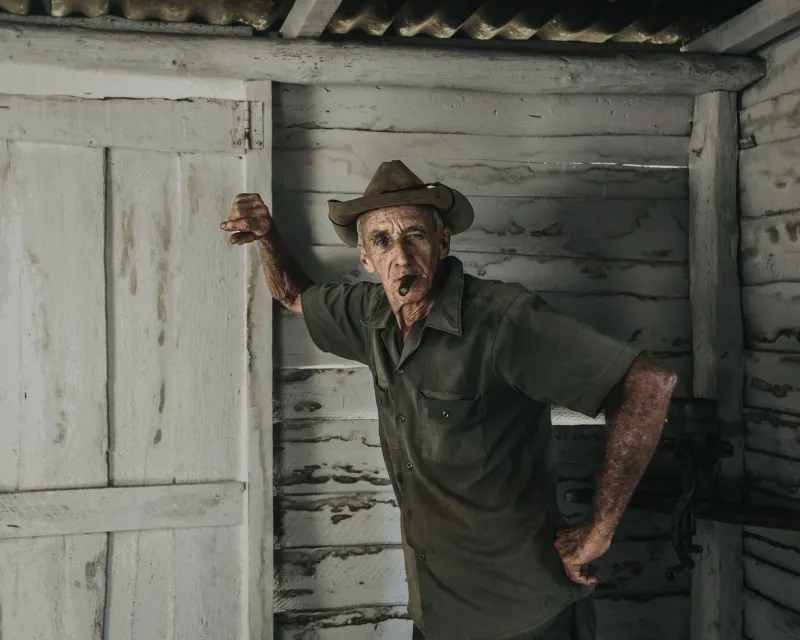
The photograph appears simple enough: a woman in her sixties stands at the edge of a garden, her hands resting on a fence post, her expression composed and direct. Behind her, the buildings of a small industrial town are visible in soft focus. It is a handsome portrait, well-lit and carefully composed. What is not visible in the image is the eighteen months the photographer spent in that town before she raised her camera. The conversations. The community meetings attended. The trust, extended slowly and conditionally, that made the woman's expression possible.
Documentary photography in America has always operated at the intersection of access and responsibility. But a growing cohort of photographers working with specific communities—tribal nations, post-industrial towns, immigrant neighborhoods, rural communities that media coverage routinely flattens into caricature—is articulating that intersection with a new level of explicitness. They are asking, in public and in their work, questions that the field has too often left unasked: Who gave permission for this photograph to exist? Who benefits from its publication? And when the photographer leaves, what remains for the people in the frame?
The Long Arrival
The photographers doing this work most seriously share a practice that distinguishes them immediately from the tradition of parachute journalism—the model in which a photographer arrives in a community during a crisis, makes compelling images, and departs before the community has had time to consider what was taken. The alternative model, which might be called embedded documentary practice, requires a fundamentally different relationship with time.
Sophia Redcloud, a documentary photographer of Lakota descent who has spent six years working within reservation communities in South Dakota and Montana, describes the process of earning photographic access as indistinguishable from the process of building genuine relationships. "The camera doesn't come out for months," she has explained in published interviews. "And even when it does, I'm not thinking about images yet. I'm thinking about whether the people I'm with understand what I'm doing and have genuinely chosen to be part of it."
This approach produces work on a timeline that is incompatible with most commercial editorial assignments. The photographs that result from years of embedded presence carry a quality that cannot be manufactured through technical skill alone—a quality of mutual recognition between subject and photographer that is visible in the images themselves.
The Permission Question
The question of consent in documentary photography is more complex than it may initially appear. Formal model releases cover legal liability. They do not address the broader question of whether a subject fully understands how their image will be used, in what contexts it will appear, and what narrative it will be made to serve. In communities that have historical reasons to distrust outside media—and there are many such communities across the United States—this distinction between legal consent and genuine informed agreement is not a philosophical abstraction. It is a practical and pressing concern.
Marcos Villanueva, a documentary photographer who has spent four years working in agricultural communities in California's Central Valley, describes a practice he calls "narrative review"—sharing not only individual photographs with subjects before publication, but the editorial context in which those photographs will appear. This means showing subjects the text that will accompany their images, explaining the audience the work is intended to reach, and providing a genuine opportunity to withdraw consent even after images have been made.
This practice is not standard in documentary photography, and it is not without complications. Subjects sometimes object to contextualizations that the photographer believes are accurate and fair. Editors sometimes resist the additional time the process requires. But Villanueva argues that the alternative—treating subjects as raw material for narratives they had no role in shaping—is a form of extraction that the field must actively resist.
Who Owns the Story
The question of narrative ownership sits at the center of the most challenging ethical conversations currently taking place within American documentary photography. When a photographer spends years within a community, making images that represent that community to the outside world, a question of authority inevitably arises: whose story is being told, and on whose terms?
The traditional answer has been that the photographer, as the author of the images, retains creative and editorial authority. This position is being challenged from multiple directions. Community members who have participated in documentary projects increasingly assert a right to review and, in some cases, approve the final selection of images that will represent them publicly. Tribal nations have developed their own protocols governing the photography of ceremonial practices, sacred sites, and community members—protocols that operate independently of and sometimes in direct conflict with mainstream editorial standards.
Denise Harrington, a documentary photographer who has worked extensively with communities in Appalachia over the past decade, frames the issue in terms of what she calls "the afterlife of the image." A photograph made in a community in 2015 may be republished, repurposed, or algorithmically circulated in contexts its subjects could not have anticipated. The people in that image have no practical control over where it travels or what arguments it is made to illustrate. This reality, Harrington argues, places a corresponding obligation on the photographer at the moment of making: to consider not only whether the image is true, but whether it is durable—whether it will continue to represent its subjects fairly across the contexts it cannot yet foresee.
The Case for Staying
Against the complexity of these ethical questions, the photographers doing this work most thoughtfully share a common conviction: that the answer is not to retreat from documentary practice but to deepen it. The problems that arise from superficial engagement with communities—the misrepresentation, the exploitation, the extraction of compelling imagery from lives that receive nothing in return—are not arguments against documentary photography. They are arguments for doing it more carefully, more slowly, and with greater accountability.
The bodies of work that emerge from this more rigorous practice are, without exception, more visually powerful than the work produced by shorter, less committed engagements. This is not a coincidence. The trust that extended presence builds produces a quality of access—to private moments, to emotional candor, to the ordinary rhythms of daily life that cameras rarely see—that no amount of technical skill can substitute for.
The woman at the garden fence, the one whose portrait appears at the beginning of this account, has seen the photographs made of her. She has reviewed the context in which they will appear. She has, in a meaningful sense, participated in the construction of her own representation. The eighteen months the photographer spent in her town before raising the camera are not visible in the image. But they are present in it, in the quality of her gaze and the particular ease of her posture—in the evidence, available to any careful viewer, that the person behind the camera was someone she had chosen to trust.
That trust is not incidental to the photograph. It is what the photograph is made of.